
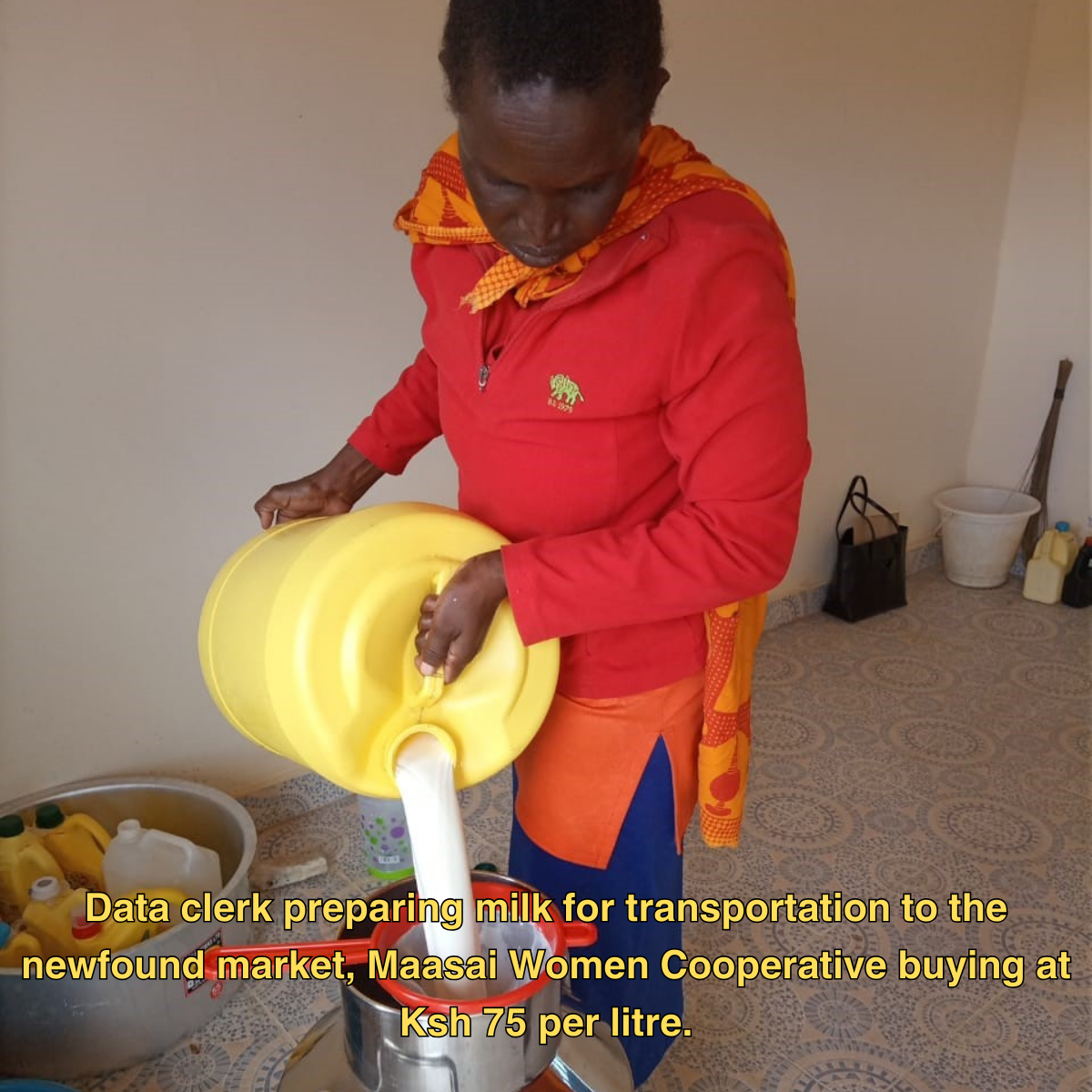
Milk is one of the most profitable value chains for our aggregators — and one of the least forgiving. It spoils in hours, and buyers test every delivery. These are the fundamentals from our milk hygiene trainings, delivered with KALRO in Kajiado County.
Watch: training in action
The essentials
- Clean animals, clean hands, clean equipment — in that order, every single milking.
- Use food-grade aluminium or stainless cans. Plastic jerricans scratch inside, and those scratches harbour bacteria that no rinse removes.
- Cool fast. Milk must reach the collection point within 2 hours of milking, or be chilled. Warm milk is a bacteria incubator.
- Test at intake. Lactometer and alcohol tests at the collection point protect the whole batch — one sour can spoils the tank.
- Record everything. Volumes per farmer per day build the trust that unlocks better prices, credit and contracts.
Our Kajiado aggregators used exactly these practices to open a new market at KSh 75 per litre — see the story in the Kajiado gallery.