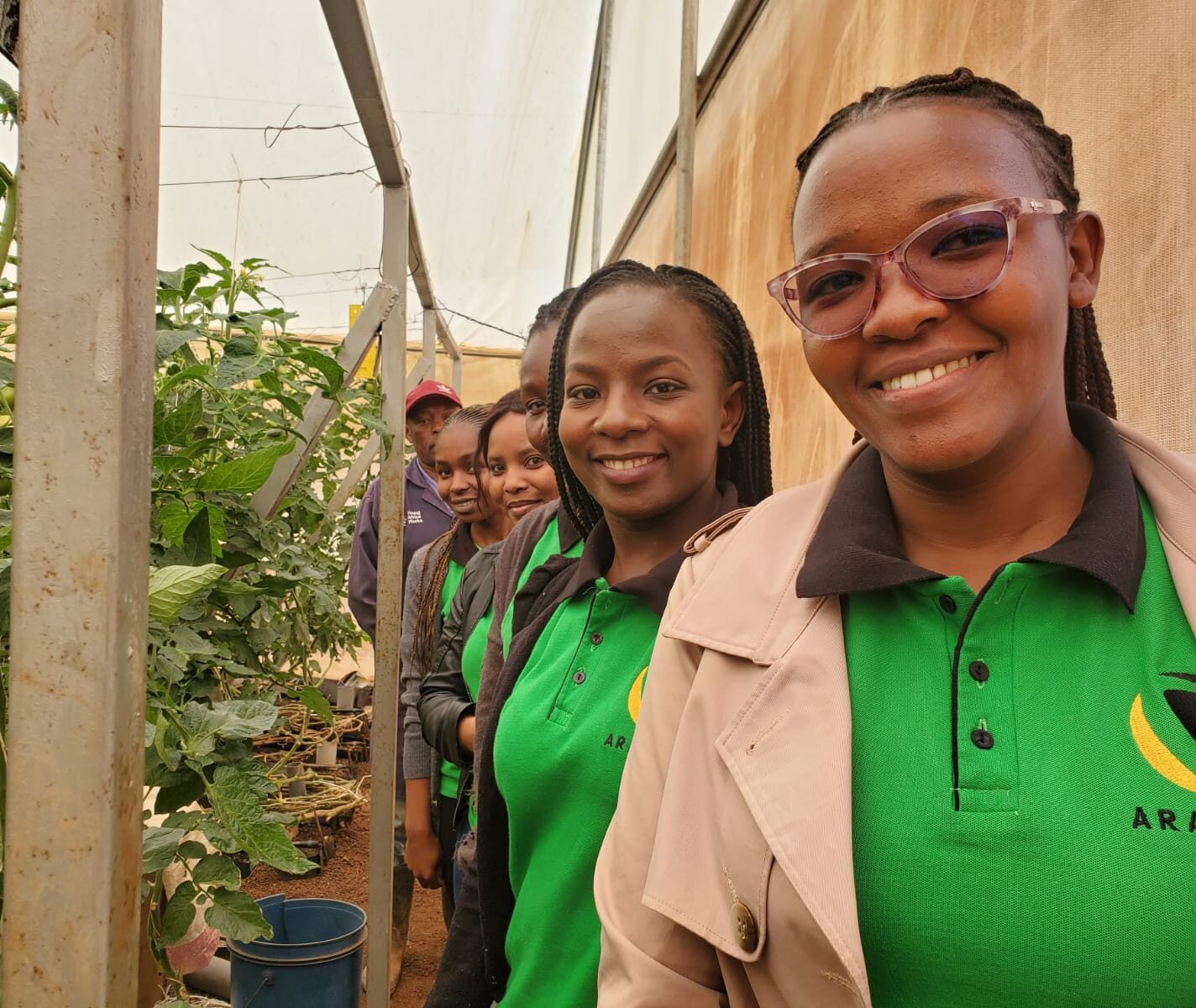
The Aggregator Enhancement Program (AEP) is Arabuko Limited’s flagship social impact program, delivered in partnership with the Mastercard Foundation. It strengthens the capabilities of young small-scale farmers and aggregators across Kenya, equipping them with practical skills and — just as importantly — with market access.
What the program does
The AEP targets young women and men aged 18 to 35, supporting them to build agricultural businesses that create employment across the value chain. It works along three lines:
- Young women empowerment. Capacity-building training that turns young women into confident entrepreneurs, with market linkages for their products and connections to aggregators for quality inputs.
- Aggregator training and support. Helping aggregators formally register their businesses, and training farmers in entrepreneurship, food safety, value addition and export market requirements.
- The YWAA Association. Arabuko helped establish the Young Women Aggregators Association — a platform where young women in agriculture network, share knowledge and grow their businesses together.
Who takes part
Selection is deliberately targeted rather than open-ended:
- Aged 18–35, inclusive of refugees and persons living with disabilities
- At least 70% of participants are young women — a floor written into the criteria, not an aspiration
- Already active in aggregation within an agricultural value chain
- Based in Kiambu, Kajiado, Machakos, Makueni, Murang’a or Nairobi county
- Willing to participate consistently for a full year
- Ready to learn, with identifiable training needs
Where it works, and in what
The program operates across six Kenyan counties and spans seven value chains: cereals, vegetables, fruits, honey, meat and fish, chicken eggs, and flowers.
Training areas
The curriculum goes well beyond basic agronomy, covering climate-smart agriculture, agroecological practices, integrated pest management, financial planning, value addition, export compliance and standards, climate change adaptation, entrepreneurship and agribusiness, food safety, and life skills.
Why the aggregator model matters
Arabuko is itself an aggregator, moving produce from small farms into commercial kitchens, institutions and homes. That changes what training is worth. A farmer who completes the program is being prepared for demand that already exists, rather than receiving a certificate and hoping a buyer turns up later.
To date, 600 aggregators have been trained to consolidate produce for the market, and Arabuko’s sourcing network now reaches 5,000 smallholder farmers. Training without a buyer is a certificate; training attached to a working supply chain is an income.